2025 TDF Last Stage
(#3) just sleeve visible Lipowitz, Pogacar (#1), Vingegaard (#2)

Washington Post checker Glenn Kessler seems to have come up short in his fact checks.
1. Washington Post fact checker Kessler simply lied in his attempts to 'protect' President Obama from criticims about his not having visited Israel during his first term.
John NolteIn today’s Post, Glenn Kessler takes on two ads critical of Obama and the attention he has paid (or hasn’t) to Israel, specifically his decision not to visit Israel as president.
Here are the key criticisms Kessler attempts to protect Obama from — the numbering and responses are mine:
1. A pro-Israel group last week began running ads knocking President Obama for failing to visit Israel. The ad is filled with the sounds of Chinese gongs and Arabian sounds, and postcard-like images showing Obama in his world travels, often arm-in-arm with Arab leaders.
ME: It is simply a fact that Obama did not visit Israel in his first term.
2. Then, on Sunday, the Romney campaign echoed this charge with its own ad also calling attention to Obama not visiting Israel as president. …
ME: Again, it is simply a fact that Obama did not visit Israel in his first term.
3. The Emergency Committee [for Israel] ad also suggests that Obama has visited Arab countries rather than Israel. …
ME: It is simply a fact that Obama did visit Arab countries while choosing to not visit Israel.
4. The ad also incorrectly says Obama has “traveled all over the Middle East.” Obama visited just Turkey and Iraq in April 2009, and Egypt and Saudi Arabia in June 2009.
ME: Kessler’s assertion that Obama visiting four Middle East countries in two years does not qualify as “travel[ling] all over the Middle East” is his opinion, not a fact.
For criticizing Obama in these four areas, Kessler awards two Pinocchios to both the Romney campaign and The Emergency Committee for Israel. In other words, Kessler calls them liars for stating FACTS.
2.
Rep. Yvette Clarke (D-NY): "I need more migrants in my district, for redistricting purposes"
https://www.youtube.com/watch?v=Geiy0dFty1A
News reports have focused on a recent incident involving a grandfather, Luis Leon, and U.S. Immigration and Customs Enforcement (ICE).
Gruber said that “the stupidity of the American voter” made it important for him and Democrats to hide Obamacare’s true costs from the public. “That was really, really critical for the thing to pass,” said Gruber. “But I’d rather have this law than not.” In other words, the ends—imposing Obamacare upon the public—justified the means.
The new Gruber comments come from a panel discussion that he joined on October 17, 2013 at the University of Pennsylvania’s Leonard Davis Institute of Health Economics.
In fairness to Gruber, American voters are not the only people whose intelligence he questions; elsewhere in the discussion, he describes New York Sen. Chuck Schumer (D.) as someone who "as far as I can tell, doesn't understand economics" and calls a staffer for Sen. Olympia Snowe (R., Maine)—presumably William Pewen—an "idiot."
Representatives of the Leonard Davis Institute tried to pull the video of Gruber's remarks, but they were too late. Phil Kerpen and others had already clipped them for public consumption.
Obamacare’s opacity was a deliberate strategy
Gruber made an argument that many of Obamacare’s critics have long made, including me. It’s that the law’s complex system of insurance regulation is a way of concealing from voters what Obamacare really is: a huge redistribution of wealth from the young and healthy to the old and unhealthy. In the video, Gruber points out that if Democrats had been honest about these facts, and that the law’s individual mandate is in effect a major tax hike, Obamacare would never have passed Congress.
“Mark [Pauly] made a couple of comments that I do want to take issue with, one about transparency in financing and the other is about moving from community rating to risk-rated subsidies. You can’t do it politically. You just literally cannot do it, okay, transparent financing…and also transparent spending.” Gruber said. “In terms of risk-rated subsidies, if you had a law which said that healthy people are going to pay in—you made explicit that healthy people pay in and sick people get money, it would not have passed, okay. Lack of transparency is a huge political advantage. And basically, call it the stupidity of the American voter or whatever, but basically that was really, really critical for the thing to pass…Look, I wish Mark was right that we could make it all transparent, but I’d rather have this law than not.”
UPenn took down the video of Gruber saying deception was crucial to Obamacare's passage http://t.co/GZW3dQ8Wf9 pic.twitter.com/Wvy17VvtPX
To a large degree, the tactic of opacity worked. Not only did Obamacare get passed, but its complex system of cross-subsidies attracted less notice on the Right than did the law’s tax hikes and spending increases. But what progressives figured out—and conservatives are just learning—is that government regulation of health insurance can serve as yet another way to redistribute money from one group to another.
In Louisiana, Obamacare hiked rates for young men by 108%
If you look at the Manhattan Institute’s Obamacare cost map—in which we analyzed how the law’s health insurance regulations affect people of different ages and genders—you’ll see that for most of the country, young people who shop for coverage on their own have far steeper gross insurance costs under the law than they did before.
For example, in Louisiana—home to a hotly contested Senate race between incumbent Mary Landrieu (D.) and Rep. Bill Cassidy (R.)—the underlying cost of insurance increased by 108 percent for 27-year-old men, and 46 percent for 27-year-old women.
https://x.com/J2dubyas/status/1947434642996670784
https://www.forbes.com/sites/theapothecary/2014/11/10/aca-architect-the-stupidity-of-the-american-voter-led-us-to-hide-obamacares-tax-hikes-and-subsidies-from-the-public/
Looking at State Department documents, it appears the department went from 57,340 total employees in 2007 to 72,895 in 2015 to 80,214 in 2024. So it grew by nearly 23,000 employees before the 'devastating' cut of 1,300.
From the Economist July 10:

John Kerry:
John Kerry, who served as former President Joe Biden's "climate czar," lamented the Biden administration's border security polices, claiming that Democrats allowed the border to fall "under siege."
"The first thing any president should say, any president, or anybody in public life, is, without a border protected, you don't have a nation — I believe that," Kerry shared on the BBC's "Reflections" podcast. "If you're going to define your nation, you have to have a border that means something. We have a system. I wish President Biden had been heard more often saying, 'I'm going to enforce the law."
The Congressional Budget Office reported that an average of 2.4 million immigrants entered the United States between 2021 and 2024, with 60% having crossed illegally, according to a Goldman Sachs analysis found. Kerry, who also served as former President Barrack Obama's Secretary of State, said Democrats turned a blind eye to illegal immigration, failing to rally behind policies which would strengthen the border.
"They just allowed the border to continue to be sieged, under siege," Kerry said. Meanwhile, President Donald Trump has made cracking down on illegal immigration a top priority for his administration. Kerry affirmed that Trump is "right" to do so. "He was right," Kerry said. "The problem is we all should have been right. Everybody should have been right, doing the same thing, all moving in the same direction."
https://kfoxtv.com/news/nation-world/john-kerry-criticizes-bidens-border-response-democrats-let-border-fall-under-siege
Attorney General John Formella announces that Naseef Bryan, of Manchester, has been arrested and charged with three class B felony counts of wrongful voting, contrary to RSA 659:34, I(e).
Mr. Bryan is expected to be arraigned at the Ninth Circuit Court, Manchester District Division, at 8:30 A.M. on August 22, 2025.
The charges allege that Mr. Bryan knowingly voted for any office or measure in the November 7, 2023 Manchester City Election, the January 23, 2024 New Hampshire Presidential Primary Election, and the November 5, 2024 New Hampshire State General Election despite not being qualified to vote because he is not a United States citizen.

Just last month, his opponent in the 2021 race, Md Nurul Hasan, pleaded guilty in federal court to 33 felony charges in a failed scheme to steal the election by illegally registering dozens of nonresidents as Millbourne voters, then casting mail ballots on their behalf, Votebeat reports. Two associates also pleaded guilty to multiple charges, including fraudulent voter registration. Millbourne is a tiny borough at the eastern edge of Delaware County, bordering Philadelphia. It covers less than 50 acres — not even a tenth of a square mile — and has roughly 1,200 residents.
The land was originally the homestead of the Sellers family, immigrants from Derbyshire, England. In the mid 1700s, John Sellers opened Millbourne Mills, a flour mill that drew its name from nearby Mill Creek, now Cobb’s Creek — the dividing line between Delaware County and Philadelphia.
As small as it is, the borough has seen huge demographic changes in recent decades. In 1980, it was more than 90% white, according to the U.S. Census Bureau, but by 2020, it was majority Asian. That was driven by immigration from South Asia, including India and Bangladesh.
Now, Market Street, the main thoroughfare through Millbourne, is dotted with South Asian grocery stores and boutiques selling Indian, Bangladeshi, and Pakistani clothing. In 2023, Sellers Avenue — a short, mostly residential street named after the founding family — was given a second name: Bangladesh Avenue, a change that the local Bangladeshi community celebrated as a testament to their growing economic and political power.
Tayub, 47, grew up in Chittagong, a port city in southeast Bangladesh. He graduated from university there with a degree in economics, and moved to Philadelphia, then Millbourne in the early 2000s. Hasan, 48, is also from Chittagong, and Tayub said the two had become friendly when he and Hasan lived in the same Philadelphia building.
“All the friends [who were] the same age, all the people from Bangladesh” socialized together, Tayub recalled.
Tayub also got to know former Millbourne Mayor Tom Kramer, a Democrat who later encouraged him to run for the five-member borough council. Tayub and Hasan both launched bids as Democrats and won in the 2015 municipal election, Tayub said. (Both Tayub and Hasan are U.S. citizens.)
In the spring of 2021, Kramer decided against running for another term as mayor. Tayub entered the race, with Kramer’s support. Hasan jumped in, too.
The town’s voters skewed heavily Democratic, which meant whoever won the party primary was likely to coast to victory in the fall. And whether it was Hasan or Tayub, the winner was poised to become the first Bangladesh-born mayor of a U.S. town, a prospect that received media attention in Bangladesh.
Tayub said he wasn’t worried about the competition. “I have faith people know me,” he said.
Tayub won the primary by 18 votes out of 258 cast. But Hasan launched a write-in campaign for the November general election with the support of two other council members: Md Munsur Ali and Md Rafikul Islam, who lost his primary bid for reelection to the council. (Md is an abbreviation for Muhammad, and a common prefix for Bangladeshi names.)
According to the federal indictment that laid out the men’s attempt to steal the election, the three conspired to obtain personal information from non-Millbourne residents — mainly friends of Hasan’s and Ali’s. Hasan then registered them to vote in Millbourne using the Department of State’s website, the indictment said — in some cases updating existing registrations by changing them to Millbourne addresses — and requested mail-in ballots on their behalf.
The indictment said Hasan and Ali told the residents of nearby communities, including Upper Darby and Philadelphia, that they would not get in trouble, so long as they “did not vote in another election in November 2021.”
The indictment described an effort to “cover up the fact that defendant Hasan was requesting mail-in ballots for dozens of different people,” in which Hasan alternated email addresses when registering the voters, as well as the addresses, and requested that the mail ballots be sent to various locations.
According to the indictment, after receiving the ballots, Hasan and the others wrote in Hasan’s name for mayor and cast the ballots. In all, the indictment says, Hasan and his co-conspirators fraudulently registered nearly three dozen people.
The indictment doesn’t identify the voters who were registered improperly, but one of the people whom Hasan registered confirmed his involvement and agreed to speak with Votebeat and Spotlight PA on condition of anonymity, out of concern that their involvement in the scheme could jeopardize their current employment.
The voter confirmed giving Hasan their driver’s license and allowing Hasan to proceed with the Millbourne registration and request a mail ballot for them.
“I trusted him and thought if I only give one vote, it’s not a problem,” said the person. “He made us fools.”
The votes hadn’t even been counted when Millbourne residents began to catch on to the scheme. According to the indictment, the borough added 29 voters between the primary and the November election. Given that Millbourne had fewer than 600 voters, it was a noticeable jump.
After Tayub grew suspicious of the new voter registrations, he brought his concerns to Kramer, the departing mayor, though neither man remembers exactly when.
“I know these people, they never live [in] Millbourne,” Tayub recalled thinking when he saw some newly registered names. “They live [in] Upper Darby.” Tayub’s attorney filed a complaint with the county elections office on Oct. 28, 2021. Tayub and Kramer said they also reported the matter to law enforcement around the time of the election. The district attorney’s office did not respond to a question about when and how they became aware of the matter.
Allen, the county elections director, said in an email that Hasan himself had questioned some voter registrations months earlier, in April, and his office had referred that matter to the district attorney. Allen wrote that in the months and years after Tayub’s complaints, “we received and responded to periodic inquiries from investigators.”
But Tayub and others in Millbourne said they grew frustrated because although the county was taking steps to look into the situation, for nearly a year afterward, they didn’t observe much progress.
“I couldn’t take it,” Tayub said during a recent interview with Votebeat and Spotlight PA.
Tayub, Kramer, and the borough’s secretary, Nancy Baulis, all met with an assistant district attorney before the May 2022 primary to discuss the status of the case, and Baulis and Kramer followed up with emails to county officials, including the district attorney, a few months later expressing frustration about the apparent lack of movement.
Kramer shared those emails with Votebeat and Spotlight PA. In his, he wrote that the assistant district attorney at the meeting had said that “this particular situation was very problematic politically,” and would generate media interest.
In an interview, Kramer said after sending that email, he reached out to the FBI. He said the investigation seemed to pick up after that.
The federal indictment came in February 2025.
The county separately charged Hasan with unlawful voting and related charges in March, and the case was pending as of May 20. Because of that, District Attorney Jack Stollsteimer said he could not discuss the matter, but said in an email that it is “inaccurate” to say that the county did not move quickly on the case before the FBI’s involvement.
Neither the district attorney’s office nor the assistant district attorney Kramer mentioned in his email responded to a request for comment on what Kramer said he was told at the May 2022 meeting.
The Pennsylvania Department of State said it “first became aware of the fraud allegations when it was contacted by federal law enforcement.”
“I don’t have any comment beyond stating the obvious, that there has been a prosecution,” Allen, the county election director, said. “It was a very difficult matter to investigate because you can’t make assumptions [based on] ‘Well, this house looks empty.’ Well, was it empty last fall? How do you know it’s empty? Did someone move out?”
Asked after an April borough council meeting if he had any explanation or comment, Hasan declined. “I don’t want to say anything now,” Hasan said.
Hasan’s attorney, Michael Dugan, said his client had no comment in response to a list of questions about the scheme. Islam, Ali, and their respective attorneys did not respond to emails with detailed questions for this story.
Cases like Millbourne’s muddy the intensifying national debate over election fraud: how widespread it is, what to do about it, and, more fundamentally, whether our election system can be trusted.
In recent years, an ecosystem of conspiracy theories about election manipulation has flourished online. Justin Grimmer, a political scientist at Stanford University, has researched the kind of broad claims of systematic election fraud that President Donald Trump and his allies made after the 2020 election to explain his loss, and said he has found no evidence of any such conspiracy.
But Grimmer’s research has turned up real instances of fraud, and they typically look like what happened in Millbourne — a local race, involving a relatively small number of votes.
“I think it gives some insight into why it would be very hard to do this in a broad national way,” he said. “This sort of fraud will leave lots of markers that people will end up discovering.”
The kind of “marker” Grimmer is referencing is the evidence Tayub was able to cite: actual names and addresses for the people who were drawn into the scheme.
Scaling a scheme like the one in Millbourne to one that involves enough votes to swing a statewide or national election would be hard, Grimmer said, because it would involve so many people.
The perpetrators here had access to driver’s license numbers, which according to the indictment they got directly from the voters. Allen, the county election director, said he was unaware of any other fraud case where voters gave out their personal information like this.
Stephanie Singer, a former Philadelphia city commissioner who was in office in 2016 when a ballot box stuffing scheme orchestrated by a former congressman was happening, has developed an algorithm that looks for anomalies in election results in the hopes of catching attempted fraud. Georgia is currently using the program to monitor its elections.
“Part of the job, not just of the board of elections, but of us as a democratic populace, is to guard against that,” she said. “The people who win the elections have access to money and power, and that means it’s really tempting to cheat.”
These attempts to cheat, even if they are initially successful at changing the results, are frequently caught, and election officials uphold those cases as examples of the safeguards working. Even so, the very fact that they occur can help destroy trust in elections.
Incidents like those in Millbourne and in a 2018 North Carolina congressional race that required a new election can serve as a “proof of concept” for those already suspicious that election fraud is happening, Grimmer said.
He recalled a county elections meeting in Oregon where he was trying to counter points made by a speaker who believed there was a broad conspiracy to steal elections, and cited a local incident from California as an example.
“In that setting, I can explain that it’s very different than the kind of conspiracy he’s alleging,” he said. “But if someone’s suspicious, all of a sudden it does reveal that it is possible to do this at least on a small scale.”
“If I’m not sufficiently persuasive in that meeting that it’s hard to scale this up,” he added, “you could see how this can further undermine trust” in election administration.
Nearly four years after the election fraud, and a month after the guilty pleas, a tense mood still hung over Millbourne’s five-member borough council.
Two members resigned recently for reasons unrelated to the fraud case, which until recently left only three members, including Hasan and Ali. Despite their convictions, the men refused to immediately resign, and weren’t legally required to do so. Sentencing is scheduled for June.
By staying in office, Hasan and Ali allowed the borough to keep conducting council business. Without them, the council wouldn’t have had enough members.
But recent council meetings were marked by fraught exchanges over the matter.
The borough council building is a tight space. A sliding partition and support pillar split the room between attendees and the U-shaped arrangement of folding tables where council members sit.
At an April 15 meeting, Kramer, the former mayor, stepped in front of the pillar when it was his turn to offer public comment.
“I’d like to address our felonious council people,” Kramer said, facing Hasan and Ali. “I wanted to ask if either one of you had any intention of resigning.”
The eyes of the other borough officials shifted to Hasan to see how he would respond.
Hasan, wearing a purple button-down shirt and gray jacket, looked uncomfortable as he answered, shifting his feet and looking around the room or down at his papers.
“Actually the court has a restriction,” he said. “I don’t want to say anything.”
But on May 13, borough officials confirmed that Hasan had formally submitted his resignation, though the council has yet to accept it.
As of May 20, Ali had not resigned.
Getting a public official out of elected office — outside of defeating them at the ballot box — is not simple, even if the official has pleaded guilty to a felony.
“It’s not just automatic,” James Gallagher, the borough’s solicitor, explained at an April meeting. He said Hasan and Ali’s resignations would be “in the best interest of the borough.”
The state Legislature can impeach local elected officials, but rarely uses that power. The other option is a quo warranto action, a legal action challenging a public official’s right to hold office, typically brought by the district attorney or state attorney general.
Chris Cosfol, a resident of Millbourne, said he wants the district attorney’s office to bring such an action. The ordeal has been “embarrassing” for the borough, he said, and he thinks the members should have automatically been removed from office once they entered a guilty plea.
Neither the district attorney’s office nor the attorney general has yet taken such action.
July 6, 2025 Texas Election Fraud
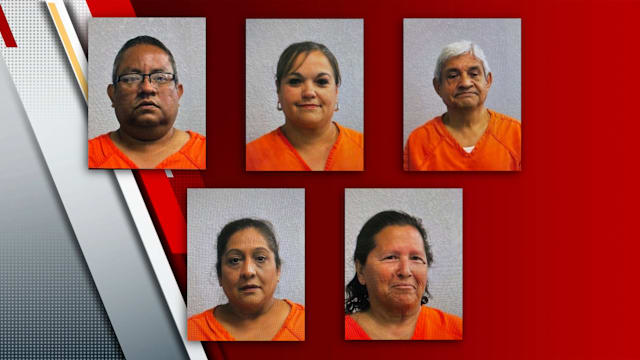
A former candidate for San Antonio mayor and former Bexar County Democratic Chair, a former candidate for the Texas House and former Pearsall council members are among the seven suspects who turned themselves in to the Frio County jail on Wednesday in connection with a massive state-led election investigation, KSAT Investigates confirmed.
81st Judicial District Attorney Audrey Gossett Louis confirmed the following people were indicted on Monday in connection with the investigation:
Medina and Rodriguez are the only two people who have not been booked into the Frio County Jail. Gossett Louis and sources tell KSAT Investigates that they plan to turn themselves in over the coming days.
https://www.ksat.com/news/ksat-investigates/2025/07/02/pearsall-isd-board-secretary-latest-to-be-charged-in-state-led-vote-harvesting-investigation/?utm_source=facebook&utm_medium=social&utm_campaign=snd&utm_content=ksat12&fbclid=IwY2xjawLTiupleHRuA2FlbQIxMQBicmlkETF6aG5oMjJPU0I5Uk1nUThKAR4vGdw87TVDrHITGQdp5yscUJOfScFExRcSX01XNOxCIUp4rlqzdkM3f0T5qw_aem_nqS6msC7URTkwAC2hJRCgw
May 3, 2025 Texas Vote Harvesting
Six suspects, including the Frio County judge and two Pearsall City Council members, are facing charges of vote harvesting and tampering with evidence, according to the Frio County Sheriff’s Office.
Frio County Sheriff Pedro Salinas told KSAT that the Frio County District Attorney’s Office received indictments on Thursday after an investigation by the Texas Office of the Attorney General. Arrest warrants were executed on Friday.
Frio County sheriff’s deputies arrested the following suspects:
The sheriff’s office said Frio County Judge Rochelle Lozano Camacho has not been arrested yet. However, she faces three counts of vote harvesting, deputies said.
The vote harvesting and tampering with evidence charges are third-degree felonies.
Vote harvesting, or ballot gathering, is when a voter completes an absentee ballot, places it in a sealed, signed envelope, and has another person deliver it to a polling location or election office.
https://www.ksat.com/news/local/2025/05/03/frio-county-judge-pearsall-officials-among-6-suspects-charged-in-connection-with-voting-investigation-sheriff-says/
March 31, 2025 Russian and Uzbek Nationals Accused of Submitting 132 Fradulent Voter Applications
A Russian national and an Uzbek national, both residing in Florida, were arrested for their alleged participation in a scheme to submit false and fraudulent voter registration applications to the Pinellas County, Florida, Supervisor of Elections.
According to court filings, Dmitry Shushlebin, 45, a citizen of Russia living in Miami Beach, and Sanjar Jamilov, 33, a citizen of Uzbekistan living in St. Petersburg, conspired to submit 132 fraudulent voter registration applications to the Pinellas County Supervisor of Elections in February and March 2023. These applications were submitted in names other than their own, in envelopes with return and address labels that were identically formatted, including containing the same typographical error, and bore various indicia of fraud including, among other things, repeating dates of birth and addresses and nearly sequential social security numbers. Change of address forms were also submitted to the U.S. Postal Service to route mail to the names and addresses on the fraudulent applications to three locations that Shushlebin and Jamilov allegedly controlled.
https://www.justice.gov/opa/pr/russian-and-uzbek-nationals-charged-conspiracy-file-false-voter-registration-applications
Nov 20, 2024 Woman Registers Dead Person and Tries to Register 129 Questionables
A Delaware County woman is accused of trying to fraudulently register four people – including her dead father and a person who died inside her home -- to vote in the 2024 presidential election. Jennifer Hill, 38, of Collingdale, Pennsylvania, was arrested on Thursday, Dec. 19, and charged with forgery, tampering with public record/information, applying for registration knowing individual is not entitled to registration, and other related offenses. Investigators said Hill worked for the New Pennsylvania Project, a voting rights organization focused on voter registration, civic education and mobilization throughout the state. Delaware County District Attorney Jack Stollsteimer said Hill was a canvasser for the organization and worked on registering people to vote. Through an app – provided by the Pennsylvania Department of State – Hill tried to register 310 people to vote between April 2024 and September 2024, according to investigators. Stollsteimer said 181 of those people were successfully registered while 129 were not successfully registered.
Stollsteimer said the state requires information – including a driver’s license and the last four digits of a social security number – during the registration process. Names that the state can’t verify are sent to the election office and then contacted through a Help America Vote Act (HAVA) letter which requests more information for verification. Investigators noticed multiple names sent by Hill through the app that were variations of the same name with different addresses and emails, according to Stollsteimer. This led to an investigation in which officials determined Hill tried to fraudulently register at least four people, including her dead father, her grandmother, an unidentified person and a person who died in her home in 2011. “She knows that because she was the person who called the police to come when he died in her house,” Stollsteimer said. Stollsteimer said Hill successfully registered one of the four through the state system.
“She did register a fraudulent person and my understanding is this is sort of a gap in the system where by putting in no date of birth and no social security number, it goes through and became a verified voter registration,” Stollsteimer said. “She did not take any further step. That fictitious person did not vote in the 2024 election. But that shows you how we still have gaps in our system that we need to have the legislature address.”
Hill was taken into custody and arraigned on Thursday, Dec. 19. She is being held in the Delaware County Prison after failing to post bail. Online court records don’t list legal representation who could speak on her behalf. While Hill is in custody, Stollsteimer said the investigation is not over and they’re still looking into the names she tried to register.
“We don’t know from the other 129 that were non-verifiable, how many of those were made up names,” Stollsteimer said. “The Pennsylvania Department of State, I believe, needs to take a look at all of the ones that were submitted by this individual and frankly, I think they should look at all of the ones that were submitted by this organization. It could be just one bad canvasser, but they should take a look and make sure that all of those people are legitimate registrations.”
Stollsteimer also said the case highlights “gaps in our system” that the Pennsylvania legislature should address. “I think the Department of State in Harrisburg needs to take a look at every single registration that she submitted to make sure that they are not fraudulent,” Stollsteimer said. “And I think our legislature needs to look at the law again and see if there are gaps that need to be filled.” NBC10 reached out to the New Pennsylvania Project for comment. Kadia Kenner, CEO of the New Pennsylvania Project, confirmed Hill was a former staffer with the group. She wrote the following statement in response to the allegations.
To be clear, NPPEF DOES NOT provide financial incentives or bonuses for voter registration application collection. Our employees have no quota to meet, and hourly wages paid to part-time canvassing employees remain the same no matter the number of voter registration applications collected.
Earlier this year, the Pennsylvania Department of State informed the New PA Project Education Fund (NPPEF) about potential issues regarding attempted voter registration by one of our former canvassers working in Delaware County.
Immediately upon being notified of the potential issues, we suspended the staff member pending investigation. An internal investigation was launched, and the organization paused our voter registration programs in several regions pending the outcome of our investigation.
Today’s announcement is proof that the multiple layers of internal and external quality control operate with integrity at both the New PA Project Education Fund, the Department of State, and local law enforcement. Due to the hard work of many individuals to prevent disruptive actions by bad actors, our voting rolls and elections are secure, and no fraudulent ballots were cast.
In addition to Hill, Stollsteimer also announced election fraud charges against Philip Moss, an 84-year-old man accused of voting in person in Florida while also completing a mail-in ballot to vote in Delaware County, Pennsylvania. “One of the principles in our democracy is one person, one vote,” Stollsteimer said. “Mr. Moss seemed to think he was entitled to two.” Stollsteimer said Moss will be taken to Delaware County where he’ll face misdemeanor charges.
https://www.nbcphiladelphia.com/decision-2024/woman-accused-of-trying-to-fraudulently-register-4-
Oct 28, 2024 Massive Fraudulent Voter Registration
On Friday, Lancaster County, Pennsylvania, city officials announced that they were investigating a massive fraudulent voter registration operation investigation involving thousands of fraudulent voter registrations.
During their press conference on Friday morning, the officials announced that the investigation would likely expand to include at least two neighboring counties.
Lancaster officials also announced that two ballot registration groups were involved in the scandal. These groups were not mentioned by name during the press conference.
A county attorney urged the Secretary of State’s office to warn other Pennsylvania counties to be on alert for fake registrations.
Oct. 28, 2024 Absentee Ballot Submitted for Dead Mother
Danielle Christine Miller, 50, of Nashwauk, Minnesota, is accused of felony voter fraud after she allegedly voted for her mother, who died in August, via absentee ballot. According to the criminal complaint, on Sept. 20, the Itasca County Auditor's Office mailed absentee ballots to citizens living in Itasca County. Then, on Oct. 7, the Auditor's Office received two signed ballots for Miller and Rose Maria Javorina. However, Javorina died on Aug. 31.
Each signature envelope for the absentee ballots includes two sections that need to be filled out by the voter and a witness. The voter must sign stating they "certify that on Election Day [they] will meet all the legal requirements to vote." The witness must then complete a section that includes their name and street address, certifying that the ballot was blank before the voter voted; the voter marked the ballot in secrecy; the voter enclosed and sealed the ballot in the ballot envelope; and that the witness is or has been registered to vote in Minnesota, is a notary or is authorized to give oaths.
The Itasca County Auditor, upon receiving the ballots, contacted the Itasca County Sheriff's Office on Oct. 9 regarding possible voter fraud. The ballot envelopes hadn't been opened, but were flagged for fraud based on the sealed signature envelopes, charges state. The sheriff's office compared both signature envelopes — they were both filled out in black ink and appeared to be similar, charges state. The sheriff's office compared the signatures on the envelope to the driver's license signature of Miller, and noted "they appeared to be very similar and appeared to match each other."
The Chairman of the Texas Democratic Party just swore in a lawsuit that voting fraud is taking place in South Texas.
The chairman of the Texas Democrat Party, Gilberto says election fraud is taking place in South Texas.
This claim is based on a lawsuit filed in Hidalgo County contesting the election for Justice of the Peace Precinct 3, Place 1. The certified vote showed Sonia Trevino winning the Democrat primary runoff last month with 4,233 votes, while Ramon Segovia finished second with 4,202 votes.
Segovia is currently challenging the election results, with Hinojosa representing him as his lawyer. The lawsuit makes numerous allegations of voter fraud, including:
– Numerous votes were allegedly cast illegally by individuals registered at an address that was not their residence or was not a residence at all.
– Many voters who cast ballots during early voting and on election day were allegedly assisted in reading or completing the ballot, despite not being eligible for such assistance under the Texas Elections Code.
– Numerous mail-in ballots that were counted should not have been counted due to voters being ineligible to vote by mail, incorrect or mismatching signatures, and mail-in ballots prepared “without direction from the voter.”
The contest argues that “because the number of illegal votes cast exceeds the difference in the total votes cast for the Contestant and those cast for the Contestee, the Court cannot ascertain the true outcome of the election and must declare the election void and order a new election.”
They claim Sonia Trevino “conspired to monitor, influence, and pressure voters to vote for her by unlawfully exploiting the voter assistance laws in the State of Texas.”
Earlier the Republican party was accused of fraud. In 2022, a lawyer wrote the district attorney's office on behalf of Dallas County Democratic Party Chair Kristy Noble. The Democrats allege that Texas House District 114 candidate Mark Hajdu, a Republican, falsely stated that he still lived within that district. They also claim that his wife, Dallas County Republican Party Chair Jennifer Stoddard-Hajdu, signed off on the false filing. Hajdus' alleged goal? Hajdu filed at the last minute so that there was a Republican on the primary ballot. Then later a good Republican contendertor could be chosen to square off with the Democratic nominee after Hajdu’s candidacy was declared ineligible, Noble argues. Hajdu was the only candidate in the Republican primary but was later declared ineligible. The Republican party was able to enter a different candidate.
Hinojosa was on the other side of voter fraud allegations a decade ago when his client, Lupe Rivera, won a 2013 election for a spot on the Weslaco City Commission by 16 votes over Letty Lopez. A visiting judge ruled in 2014 that some of the votes for Rivera were cast illegally and ordered a new election to be held as soon as possible. Legal maneuvering prevented that reelection from being held until 2017. When the election was finally held again, Lopez was name the winner while Hinojosa's client, Rivera, faced criminal charges.
Nov 21, 2023: Wife Submitted Fraudulent Ballots
A group of Vietnamese immigrants were targeted in a months-long voter-fraud scheme by the wife of an Iowa Republican county supervisor who wanted her husband to win “by any means necessary” in the 2020 primary and general elections, according to prosecutors. Kim Phuong Taylor was convicted Tuesday of 52 counts of voter fraud, the Justice Department announced. A federal jury in Sioux City, Iowa, found Taylor, 49, guilty on 26 charges of false information in registering and voting, 23 charges of fraudulent voting and three charges of fraudulent registration. Taylor carried out a scheme to fraudulently generate votes for her husband, Woodbury County Supervisor Jeremy Taylor, who was challenging Rep. Steve King (R-Iowa) in the June 2020 GOP congressional primary election. After Jeremy Taylor finished a distant third in that race, Kim Phuong Taylor again engaged in ballot fraud to help her husband’s successful reelection campaign as county supervisor, prosecutors say.
“[Kim Phuong] Taylor submitted or caused others to submit dozens of voter registrations, absentee ballot request forms, and absentee ballots containing false information,” the Justice Department wrote in a news release. “Taylor completed and signed voter forms without voters’ permission and told others that they could sign on behalf of relatives who were not present.” Prosecutors have not specified whether Jeremy Taylor, who still serves on the Woodbury County Board of Supervisors, was aware in advance of the fraud perpetrated by his wife on his behalf or when he learned about it. Jeremy Taylor, who met his wife while teaching at a university in Vietnam, was not charged but was named in a government filing as an unindicted co-conspirator, according to the Sioux City Journal. The Taylors did not take the stand during the trial.
As Jeremy Taylor hit the campaign trail, his wife also was busy, according to prosecutors. Her lawyers argued that Kim Phuong Taylor, who is from Vietnam, had been helping voters in Sioux City’s Vietnamese community for over a decade, often with documents not related to elections. But witnesses testified that none of them gave her permission to submit ballots on their behalf during the 2020 elections.
In one instance, Huong Nguyen, the mother of Tam and Thien Doan, testified that Kim Phuong Taylor had called her to see if she needed help voting and came to the house to complete the paperwork that Nguyen signed. Nguyen testified that she was unaware that completing ballots for her children was against the law, and Assistant U.S. Attorney Ron Timmons said during closing arguments that Kim Phuong Taylor “told her to lie” and not tell her children what happened to their ballots.
The exchange became an issue in October 2020, when Woodbury County Auditor and Recorder Pat Gill met with Tam and Thien Doan over returned ballots that the siblings said they had not filled out. Thien Doan was shown his ballot with a signature that was not his, and that was marked as a vote for Trump, according to the Journal.

“I had no intention of voting for Donald Trump in that election,” he said.
Other members of the Vietnamese community testified that Kim Phuong Taylor committed voter fraud without their knowledge. Gill, who also is the election commissioner and the lone Democrat holding elective office in Woodbury County, testified that the handwriting on many of the ballots looked similar but that it was impossible to tell who submitted the ballots.
“It looked like something was going on, but at that point there was nothing I could do,” Gill said.
May 7, 2022 Illegal Registration and Voting by Felons in Florida (Previous posting about same)
A 10th former jail inmate is facing felony voter fraud charges, accused of registering to vote and casting a ballot in the 2020 presidential election while owing unpaid court fees dating as far back as 1994.
The latest indictment follows an eight-month investigation by the Florida Department of Law Enforcement into voter registration efforts that has resulted in charges being filed against nine other former Alachua County inmates over fraudulent voting – at least eight of whom registered during registration drives organized by Alachua County’s Democratic elections supervisor, Kim A. Barton, in February and July 2020.
All current and former employees at the Alachua County Supervisor of Elections Office have been cleared of wrongdoing.
Dedrick De’Ron Baldwin, 46, of Gainesville is the 10th felon charged. He registered to vote in February 2019 as a Democrat. He then updated his voter information in July 2020, the same month the supervisor of elections office organized a voter drive in the jail, according to voter records.
Baldwin voted by absentee ballots in the 2020 Democratic primary and the general election that year, according to voting records.
He is being charged twice over registering to vote while prosecutors said he was ineligible, and he was charged with two counts of illegally casting a ballot, according to court records. Submitting false voter registration and illegal voting are third-degree felonies punishable by up to five years in prison and a $5,000 fine.
Baldwin was convicted of manslaughter and aggravated battery in August 2021. He is now serving a 12-year prison sentence, according to court records.
Baldwin was still awaiting trial in the manslaughter case when he voted. It was $494 in unpaid fines from burglary and weapons charges dating as far back as 1994 that would have made it illegal for Baldwin to register to vote twice and cast a ballot, court records showed.
Under Florida law and court rulings, most felons – except those convicted of murder or sexual offenses – can register and vote after they completed their prison terms and no longer owe any unpaid fines or court fees. It would have been permissible for jail inmates to register as voters at the time who were awaiting the outcomes of other criminal cases if their previous felony cases had already been wrapped up.
Baldwin is the fifth person to provide a firsthand account of the jailhouse voter registration drives.
“They told us that if we weren’t already convicted of our current crime then we were able to sign up and vote,” he wrote from prison. “They probably signed 65 or 70 people up that day, so I don’t understand how I can be charged with voter misconduct. All I was doing was what they told me I had a right to do.”
Three of those charged have said investigators visited them to ask about the election worker who helped them register.
In eight of the other cases, the felons registered on the same day an Alachua County elections official conducted a voter registration drive for inmates. The drives took place during dueling legal disputes following the passage of Amendment 4, which gave most felons the ability to restore their right to vote after completing their sentences and fully paying any owed legal fees.
Nine people have been charged in Alachua County with election crimes, with several more under investigation following complaints filed by a Gainesville database researcher.
At least eight are currently inmates in the county jail, while one was recently released.
The group, all of whom voted by mail from the jail, is the first batch of dozens who could face criminal charges in an ongoing, far-reaching law enforcement investigation spanning the Sunshine State.
Mark Glaeser, who has a history of filing complaints against government officials, identified the group of voters and notified prosecutors last year. He says he has identified nearly 2,000 sex offenders in Florida who illegally registered to vote in the 2020 election, roughly 25% of whom voted.
https://www.gainesville.com/story/news/2022/03/30/4-alachua-county-inmates-charged-voter-fraud-investigation/721597500
Nov 6, 2020 Social Worker Illegally Registers 134
Attorney General Ken Paxton today announced that his Election Fraud Unit assisted the Limestone County Sheriff and District Attorney in charging Kelly Reagan Brunner, a social worker in the Mexia State Supported Living Center (SSLC), with 134 felony counts of purportedly acting as an agent and of election fraud. If convicted, Brunner faces up to 10 years in prison for these offenses.
State Supported Living Centers serve people with intellectual and developmental disabilities. Brunner submitted voter registration applications for 67 residents without their signature or effective consent, while purporting to act as their agent. Under Texas law, only a parent, spouse or child who is a qualified voter of the county may act as an agent in registering a person to vote, after being appointed to do so by that person. None of the SSLC patients gave effective consent to be registered, and a number of them have been declared totally mentally incapacitated by a court, thereby making them ineligible to vote in Texas.